Nation · National
Trump touts Asia trip, AI guardrails with Xi and a tax threat on overseas data centers at White House news conference
After a three-day Asia trip that included a first three-way meeting with Xi and Putin, Trump took questions on AI, chip sales, cybersecurity and a Democratic Congress, NPR and PBS NewsHour reported.
Listen to this brief · 5 min
Read aloud by an AI voice from the text below. Download MP3
What happened
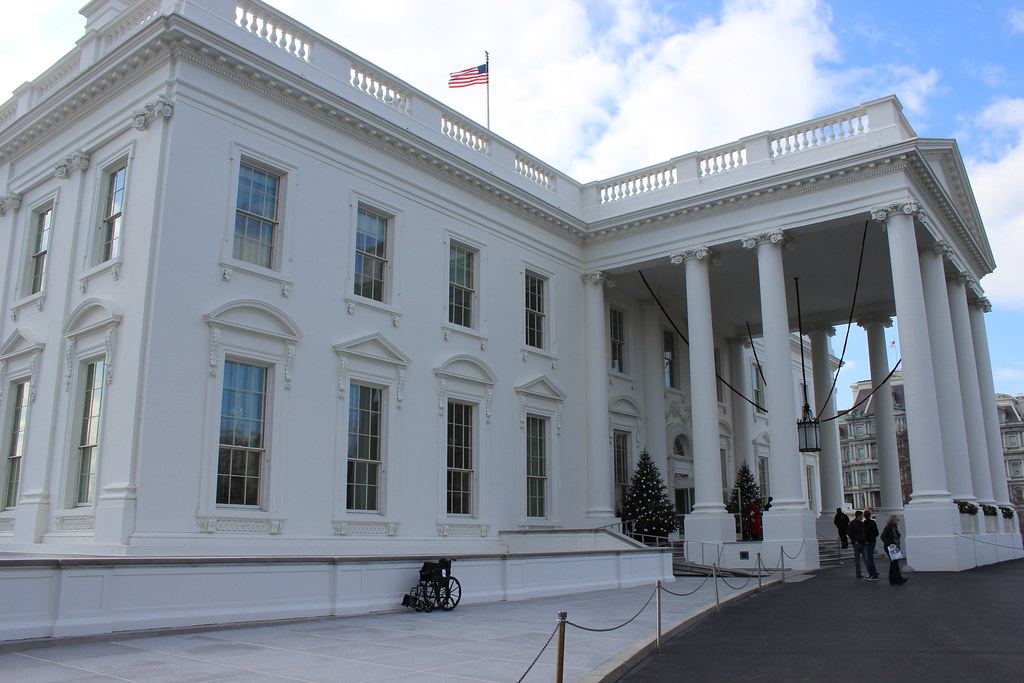
President Donald Trump held a lengthy news conference at the White House on Friday after returning from a three-day trip to Asia. According to NPR, the trip included the first ever three-way meeting with Chinese President Xi Jinping and Russian President Vladimir Putin, but produced little in the way of agreements on key global issues.
NPR White House correspondent Franco Ordoñez described the event as meandering. He said Trump opened with highlights of his first two years in office and spent about 30 minutes recounting his time abroad and his relationships with Xi and Putin.
The Asia trip and Putin
PBS NewsHour reported that Trump got back from Shenzhen late Thursday night and gave a glowing review of the trilateral meeting. Asked whether Putin is a friend of America, Trump did not directly answer. NPR aired him saying, "I can't speak to America," while PBS reported he said he and Putin have a fantastic relationship.
Trump again said Putin wants peace. PBS correspondent Liz Landers noted that Russia bombed Ukraine on Friday morning.
Rubio defends the meeting
Secretary of State Marco Rubio also took questions and pointed out that the U.S., Russia and China hold the overwhelming majority of the world's nuclear weapons. "The idea that these three leaders should not engage on a regular basis is not just absurd. It's dangerous," Rubio said, according to PBS. Landers said Democrats have questioned why Trump invited Putin and elevated Russia while it is at war with Ukraine.
AI, chips and data centers
Guardrails with Xi
Trump said he and Xi agreed to put joint guardrails on artificial intelligence, which he called super intelligence. NPR reported that details were scarce and that the idea stood out because Trump has previously resisted restrictions on AI development and has said he wants to keep a U.S. advantage over China.
Data center tax threat
Trump said companies would not be allowed to build data centers in other countries, adding that if they do, "we're going to put a tremendous tax on them," according to PBS. He called data centers a "tremendous asset" and said the U.S. needs them to compete with China. Our earlier brief covers his threat to tax AI data centers built outside the US.
Nvidia chip sales
NPR national security correspondent Greg Myre noted that Trump has allowed Nvidia to sell advanced chips to China. As of May, the administration had approved the sale of nearly 900,000 advanced chips, including to Alibaba and Tencent, which NPR said are on a Pentagon list of firms linked to China's military. PBS reported that Trump did not really answer questions about Jensen Huang, who stepped down from Nvidia this week, and that the administration issued a new policy Monday tightening who can export chips.
Cybersecurity leadership
NPR reported that Trump fired White House cybersecurity director Sean Carncross and said he did not think that person was good enough. Carncross is being replaced by Kirsten Davies, chief information officer at the Defense Department. More on that change is in our brief on Davies being named national cyber director.
According to NPR, the Cybersecurity and Infrastructure Security Agency, which handles election security, has had no director since Trump took office almost two years ago. His nominee, Michael LoSapio, had a Senate confirmation hearing Thursday, where he refused to say who won the 2020 election and said he did not think the Capitol was attacked on January 6, 2021.
Iran and a new Congress
NPR reported no sign that the war with Iran, now nearly nine months old, was discussed in detail on the trip. Trump repeated that Iran cannot have a nuclear weapon and that Iran wants a deal, as Iranian attacks on oil tankers and Gulf countries have increased.
PBS reported that Trump will soon work with Democratic majorities in both the House and Senate. He called likely incoming Speaker Hakeem Jeffries smart and named health care and immigration as possible areas of bipartisanship, without offering specifics.
What to watch next
- Whether the Senate confirms Michael LoSapio to lead CISA, which NPR said is not yet clear.
- Any details on the AI guardrails Trump said he and Xi agreed to pursue.
- How Trump works with Democratic majorities in the House and Senate, including on health care and immigration.
- How the administration's new chip export policy announced Monday affects sales to Chinese companies.