Community · Nevada
Wild horse advocates warn a BLM livestock impound notice could strip federal protections from Nevada herds
Three advocacy groups say a BLM notice to impound unauthorized livestock in its Carson City District could let wild horses be reclassified as strays and sold, as large roundups near Fallon and Lovelock approach.
Listen to this brief · 5 min
Read aloud by an AI voice from the text below. Download MP3
What happened
Wild horse advocacy groups are pushing the Bureau of Land Management to clarify a notice saying it will impound unauthorized livestock in parts of Nevada, the Las Vegas Sun reported. The groups worry the notice could let the BLM and state agriculture officials treat wild horses as stray domestic livestock, removing the animals' federal protections.
According to the Sun, the BLM issued a notice of intent to impound unauthorized livestock in its Carson City District in September. That notice came before an October roundup about 30 miles north of Reno, which the agency said was needed because of approaching winter, damage from recent wildfires and ongoing drought.
Why advocates object
The groups raising concerns are Wild Horse Education, Rewilding America Now and Montgomery Creek Preserve. They argue the BLM could use the notice to classify any unbranded, free-roaming horse as livestock, especially since wild horses often move between public and private land. In Nevada, they said, the BLM could quickly hand such a horse to the state Department of Agriculture to be claimed or sold for slaughter with little or no oversight.
Concerns about public observation
Laura Leigh, founder of Reno-based Wild Horse Education, said in a statement reported by the Sun that the BLM is making irreversible decisions about the horses' legal status out of public view. She argued that classifying unbranded horses as livestock at the capture site violates the public's First Amendment right to observe, and called for full transparency and public inspection before any horse is turned over to the state.
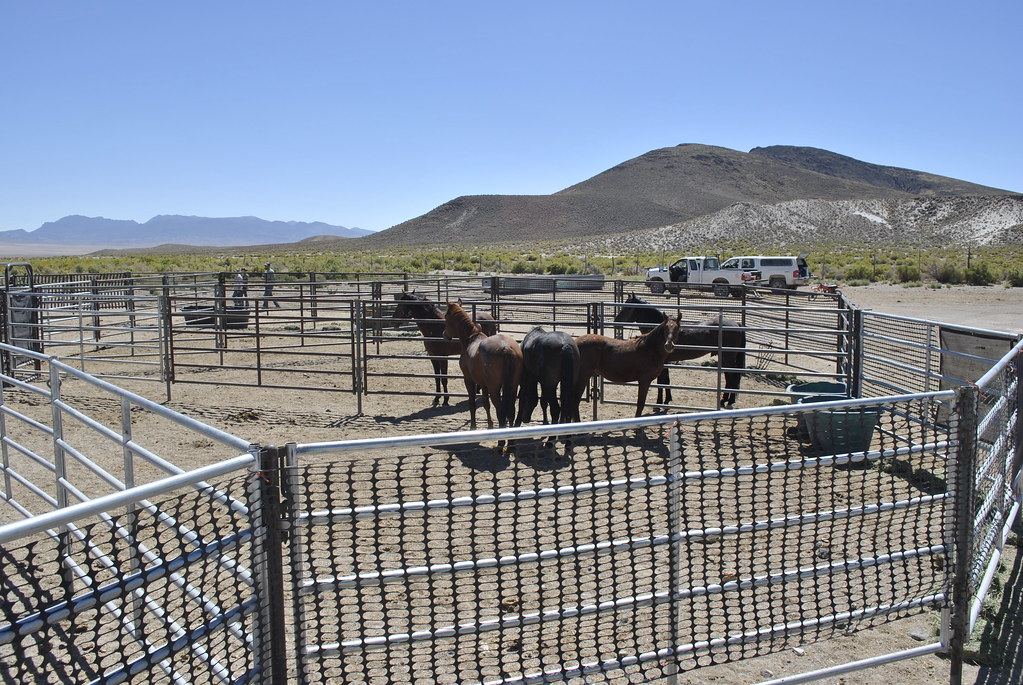
The Sun reported that public observation of roundups is usually allowed. During the October roundup, which captured 323 horses, observers were kept 5 miles from the spot where helicopters drove the animals into traps.
The demand letter
An attorney for the advocates sent the BLM a demand letter dated Oct. 16, before the roundup, arguing the notice was illegal, according to the Sun, which obtained the letter. The letter said the notice does not explain how the agency will tell domestic livestock apart from wild horses, and that it conflicts with the legal definition of wild horses as all unbranded and unclaimed horses. It also argued the federal government cannot legally hand the decision over to a state agency such as the Nevada Department of Agriculture.
The letter threatens legal action. Attorney Randall Weiner wrote that deciding whether a captured horse is a protected wild horse or an animal to be given to a claimant is the most consequential decision of a roundup and cannot be undone, and that public observation is the only available check on it.
Where the notice applies
The impound notice is in effect for one year across the Carson City District, which manages 5.3 million acres of public land in western Nevada and eastern California, the Sun reported. The district includes the area of the October roundup, which the BLM calls the North Complex.
Upcoming roundups in the district
The district also covers land about 60 miles east of Fallon in the Clan Alpine Herd Management Area, where a roundup of 600 horses is planned starting Dec. 1. It includes parts of the East Pershing Complex, south of Winnemucca and east of Lovelock, where the BLM plans to round up 1,000 horses starting Jan. 5. Manda Kalimian of Rewilding America Now said in a statement that the notice amounts to a blank check for the whole region, not just the North Complex.
What the BLM says
The BLM did not immediately respond to requests for comment, the Sun reported. In correspondence with staff for U.S. Rep. Dina Titus, a Nevada Democrat who has long advocated for wild horses and burros in Congress, the agency described the impound notice as standard procedure for roundups.
In a news release announcing the end of the October roundup, the agency said the capture was needed for animal welfare because rangeland conditions had worsened and herd numbers had grown beyond what the land could support. The BLM estimated there were 443 horses in an area it said could support only 101 to 157. The agency said scarce forage and water put wild horses at risk of hunger, dehydration, exhaustion and injury. Readers can find more statewide stories in our community coverage.
What to watch next
- A roundup of 600 horses in the Clan Alpine Herd Management Area east of Fallon is planned to begin Dec. 1.
- A roundup of 1,000 horses in the East Pershing Complex is planned to begin Jan. 5.
- The advocates' Oct. 16 demand letter threatens legal action over the impound notice.
- Advocates are still seeking clarification from the BLM on how the one-year notice will be applied.